

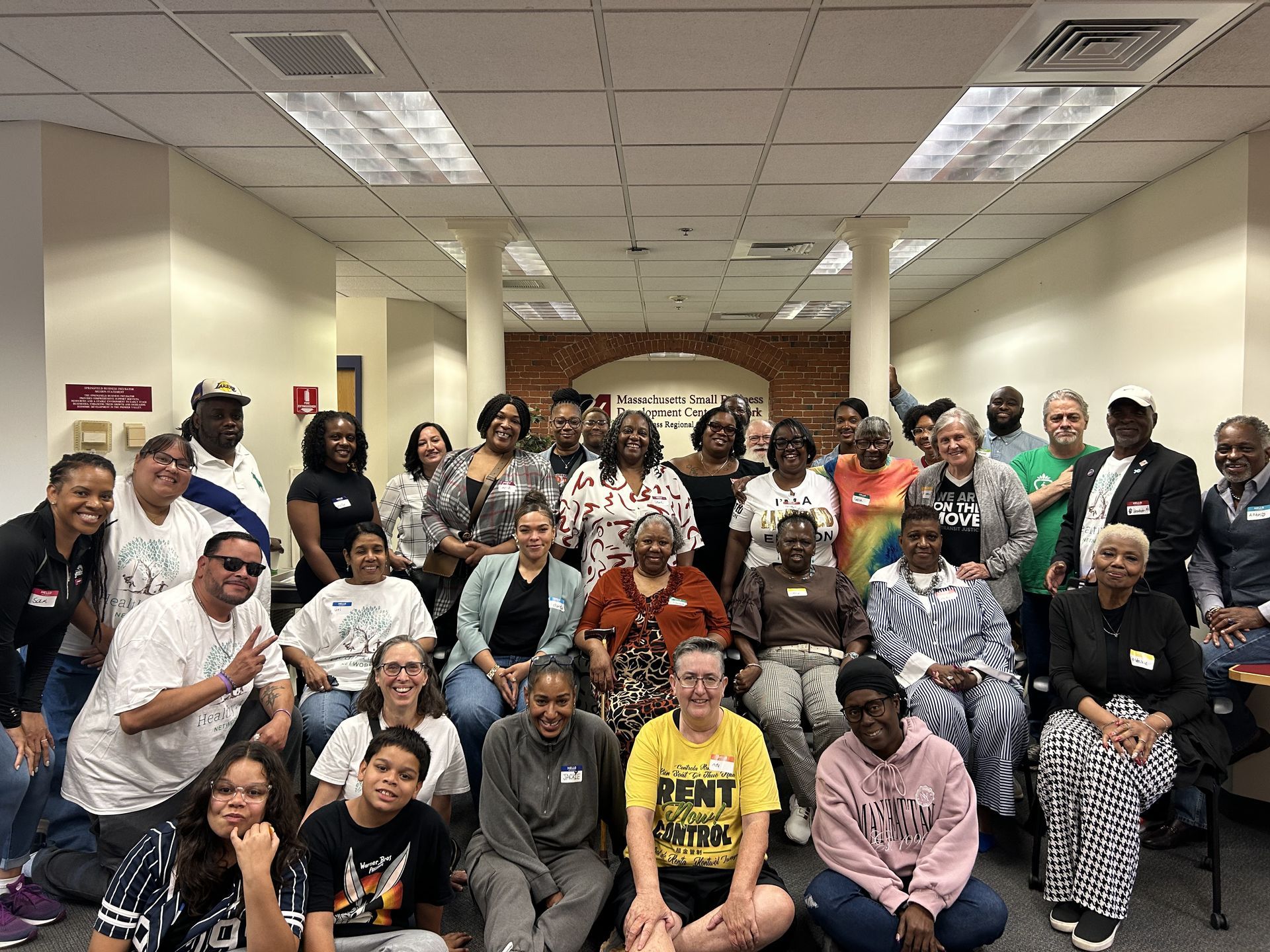
In late September, resident advisors (RAs) from the
Public Health Institute of Western MA
gathered at Regreen Springfield for a Peer-to-Peer Learning Workshop. RAs from the following 5 coalitions shared successes, challenges, and key learnings. A team of RAs representing each initiative led presentations that sparked dialogue, allowing everyone to learn from one another, ask questions, and deepen their understanding of community efforts.
- Intergenerational Social Connections (ISC): Focuses on bringing youth and older adults together in Springfield to reduce loneliness, build relationships, and strengthen community across generations.
- Live Well Springfield Climate Change & Health Equity (CCHE): Focuses on advancing community choice energy for Springfield, creating strategies to address extreme heat, and developing a new Climate Change Action Plan for the city.
- Live Well Springfield Transforming Communities Initiative (TCI): Focuses on addressing Springfield’s housing needs by improving housing conditions, increasing affordability, and expanding opportunities for homeownership.
- Healthy Air Network: Focuses on monitoring air quality, exploring transportation issues, developing an innovative app, and tackling climate change challenges.
The workshop also served as a warm welcome and orientation for new RAs joining the committees, especially our new Parent Advisors for the Youth Mental Health Coalition (YMHC), which is focused on youth mental health and problem gambling prevention. This was the largest cohort of resident advisors for the Public Health Institute and Live Well Springfield yet.
SHARE