


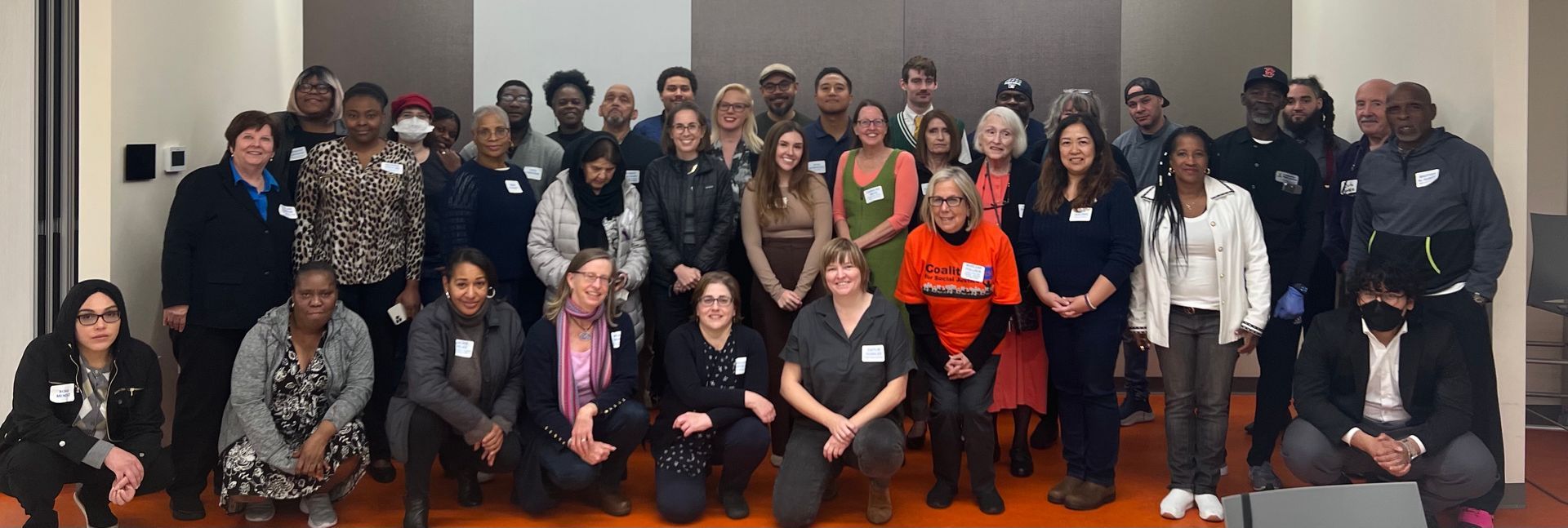
Over the past six years, the Age-Friendly Coalition has dedicated its efforts to gaining insights into the challenges and needs of older adults in relation to housing, transportation, and community support. The report
“Healthy Aging with a Criminal Record in Hampden County MA: A Health Impact Assessment,” (HIA) revealed that older adults have been denied housing due to having a Criminal Offender Record Information (CORIs) despite these records being decades old. This obstacle has made it challenging for many older adults to access stable housing.
The HIA includes
six potential policy changes
to help older adults with CORIs secure housing:
- Establish formal partnerships between housing and service providers;
- Limit tenant selection criteria to the two types of convictions that HUD denies;
- Allow applicants to submit evidence of mitigating circumstances before denial;
- Create explicit criteria for denial that is available publicly;
- Share statistics about denials;
- Allow family members to house people with a CORI.
Housing is essential to a person’s overall well-being. Securing housing is pivotal for a successful reentry into the community. Advocacy is needed to address the life-long barriers a CORI creates, especially for older adults. Because of this, the
Point32Health Foundation provided an additional $94,000 grant to Live Well Springfield to advocate for “clean slate” legislation. The
Clean Slate Initiative is a national coalition working with community-based organizations across the country to pass and implement laws that
automatically seal the records of people who are eligible, and expand eligibility. The Age-Friendly Coalition,
Men of Color Health Awareness, and
New North Citizens Council have joined the
Clean Slate Initiative with the goal of making Massachusetts the thirteenth state to enact these types of legislation. This would help change the lives of tens of thousands of people in the Commonwealth.
To join the movement contact
Andrea Freeman.

SHARE